


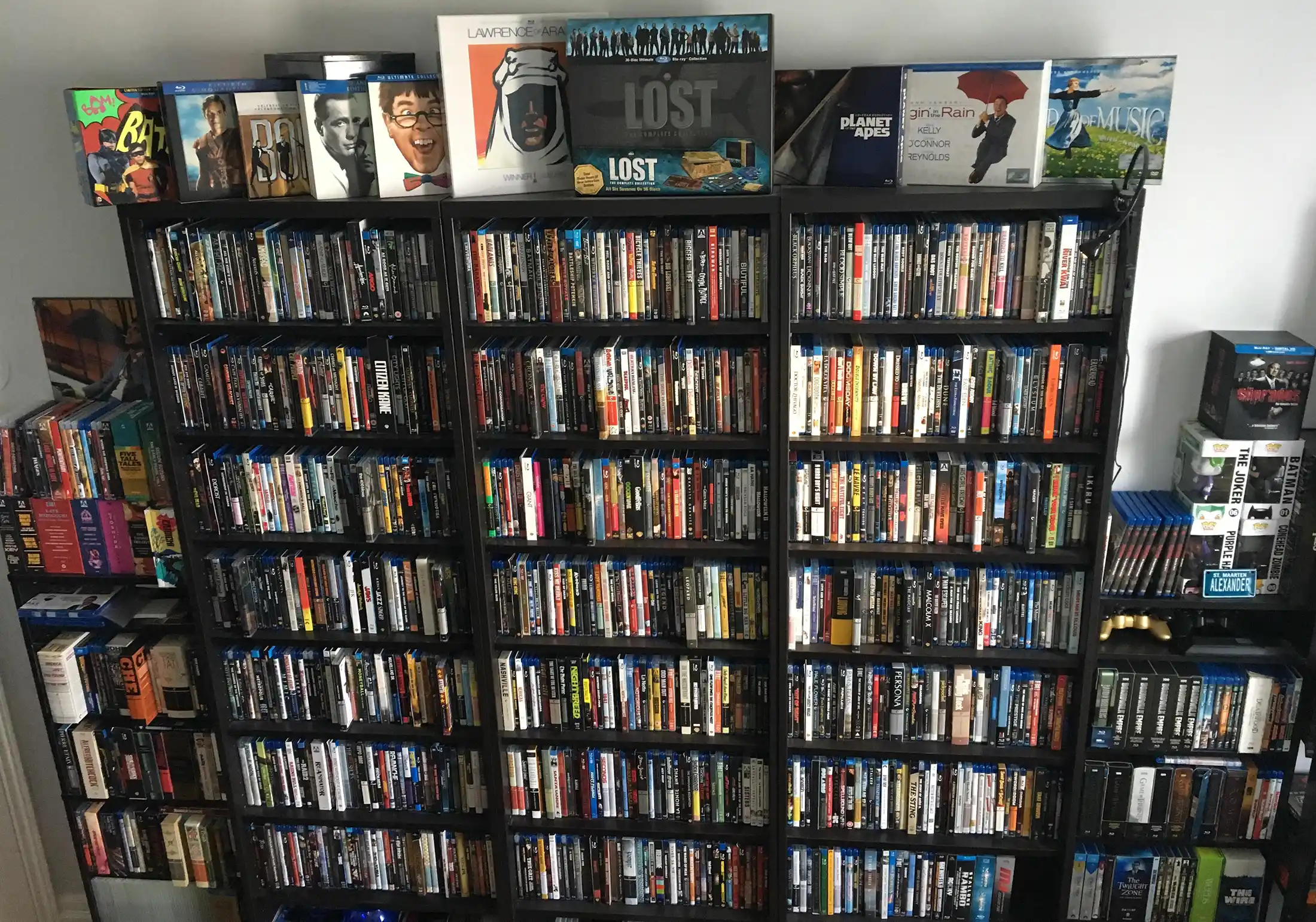
It’s genuinely surprising when you realize that DVD itself is now 30 years old. So when you map it out – 10 years between DVD and Blu-ray, then another 10 years until Ultra HD Blu-ray – you’re looking at a really marked timeline of formats. We’re now at the moment where Ultra HD Blu-ray is 10 years old, and here’s the thing: there’s no replacement format coming. At least not in terms of physical discs. I’m fairly convinced streaming is the way forward because that’s how most people consume content now. But there’s still this small proportion of people – aficionados who’ve built collections they can tangibly hold and admire – and I completely understand why.
The Lost Art of DVD
I come at this from a very specific angle. I was a DVD author back in the day. I’ve worked on corporate DVDs, independent films, feature films – the whole spectrum – and I have to be honest with you: it’s a lost art, and I’m genuinely sad about it.
Here’s why I love DVD so much: the specifications were brilliantly clever. The engineers who designed it understood exactly what they could achieve within the hardware limitations of the time, especially as it was taking over from VHS. They brought true digital video to the mainstream for the first time – proper digital audio, surround sound done right. The MPEG-2 codec they chose was incredibly clever, especially on CRT TVs. It would smooth out all the little compression blemishes beautifully. On a decent TV, a DVD looked genuinely excellent.
But it wasn’t just about the picture and sound. The whole package was an art form. When you’d buy a commercial DVD, you’d get this beautiful physical product – the packaging, the design. Then the menus would be designed to reflect that packaging aesthetic. Everything cohesive, everything intentional. Every DVD was uniquely designed and uniquely authored. That was part of the joy.
Plasma, OLED, and a Humbling Moment
I had a large plasma screen for years – over a decade and a half of heavy use. And here’s the thing: DVDs always looked really good through it. I’d watch them upscaled through a DVD or Blu-ray player, and they just… held up. I never thought much about it at the time. The plasma screen’s natural way of emitting light and blending pixels slightly made it almost like a digital CRT – it had that natural smoothness that made imperfect sources look graceful.
Then my plasma finally died last year after all those years of abuse, and I replaced it with a high-quality OLED screen. And suddenly – suddenly – I could see everything. All the detail in the DVD stream. All the compression artifacts. The DVDs, to be honest, started looking quite tired and worn out. OLED is so perfectly crisp and clear that those blemishes that were invisible on plasma are suddenly unavoidable. It was humbling, actually. It vindicated the move to Blu-ray and beyond in a way I understood intellectually before, but now I felt it.
The Decline of Thoughtful Design
Here’s where it gets sad though. When Blu-ray came out, the menus changed. Some were still unique, but there was – let’s say – laziness creeping in. I started noticing that studios like Universal would use the exact same template menu design across all their releases. Pop-up from the bottom, from the left, all identical, all uniform. No unique design anymore. The reason, I suspect, is practical: Blu-ray menus switched from pre-rendered streams (like DVD) to interactive elements programmed with Java. Suddenly, the expense and skill needed to author unique, beautiful menus became unviable. You can tell. The experience isn’t the same.
Blu-ray did give you better picture and sound quality, sure – but honestly? On a good DVD player with a good screen, DVDs looked really very good anyway. So Blu-ray looked a bit sharper, which was nice. But then those bland, repetitive menus were disappointing. That lost art form – the beauty and aesthetic of the authoring process – that stung.
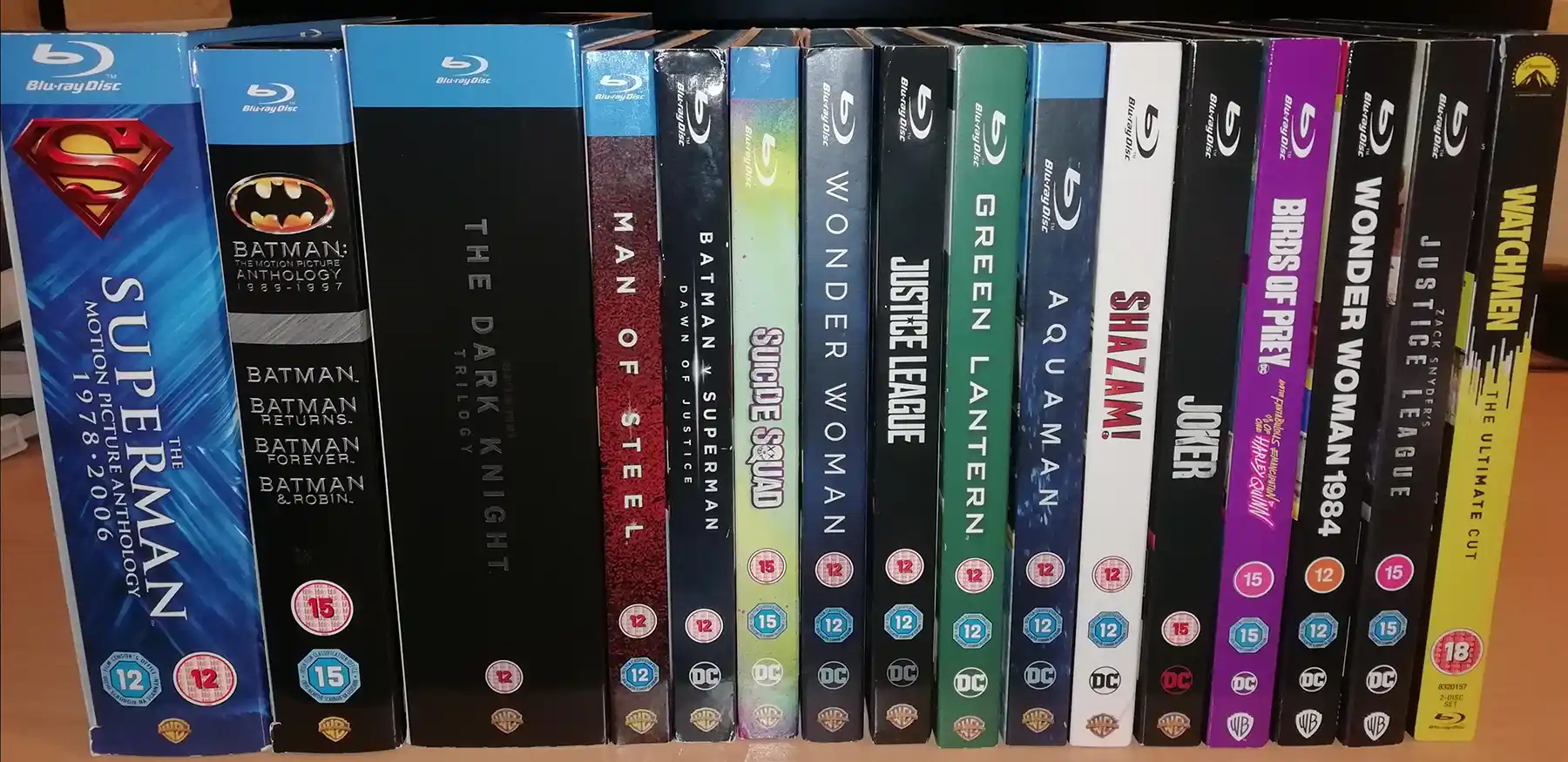 When UHD Blu-ray Truly Impresses
Now, 4K Blu-ray, Ultra HD Blu-ray – it’s a similar story on the menu front. But here’s the crucial difference: the newer codecs, the HDR implementation, the vastly wider color gamut. If you have an HDR TV, the jump in picture quality is massive . It’s genuinely like going from VHS to DVD all over again – that crazy generational leap that’s mind-blowing. Blu-ray was great, but it wasn’t mind-blowing. 4K done properly? It absolutely is. When it’s done right, it’s extraordinary.
Yes, the menus still leave something to be desired, which takes away from the complete experience. But the format itself? UHD Blu-ray is far better than streaming currently offers, and it’s tangible – you have something on your shelf, something you own outright. Nobody can take it away through licensing expiration. You own it forever.
The Format Wars and Industry Exodus
Now, stepping back to the bigger picture: Blu-ray officially launched in June 2006, beating out HD-DVD (which Toshiba abandoned in 2008 after Warner Bros. backed Blu-ray). Sony’s decision to include Blu-ray in the PlayStation 3 was instrumental in actually bringing the format into millions of homes. The Blu-ray Disc Association backed it with major manufacturers – Sony, Panasonic, Samsung, LG, Philips, Pioneer – and major studios. The first players appeared in 2006, though those early titles used the old MPEG-2 codec. It wasn’t until late 2006 that newer MPEG4 AVC encoded films started arriving. Lossless audio came in 2007, and immersive formats like Dolby Atmos came much later in 2014–2015. It was a journey rather than a revolution, but it ultimately made home cinema a serious rival to the theatrical experience.
UHD Blu-ray arrived 10 years later in 2016 with no physical rival – but fierce competition from streaming services and VOD platforms like Apple iTunes. The shift toward digital has turned UHD into a niche format for collectors and movie buffs. But it still championed 4K HDR10, with optional Dolby Vision and HDR10+, plus immersive audio that became much more widespread with UHD.
The Troubling Signs
Here’s what concerns me though. Samsung stopped making Blu-ray players in 2019, Oppo in 2018, LG in 2024, Pioneer in 2025. Even Sony – one of the last major manufacturers – has started discontinuing Blu-ray recorders. PlayStation’s move away from physical discs, frankly, is the most concerning development. And then there’s Panasonic’s TV/AV division being taken over by Skyworth, which raises real questions about whether their excellent UHD players will continue being supported.
The Blu-ray Disc Association itself has ceased development work, which means newer codecs – Dolby Vision 2, HDR10+ Advanced, AV1, AV2 – are unlikely to appear on future discs. There are also emerging competitors in quality: Kaleidescape’s download service offers pristine quality (though it’s out of reach for most people), and Sony Pictures Core has matched UHD quality since 2021 – though it can’t match the audio quality and only offers Sony titles.
Why It Still Matters
But none of this means Blu-ray or UHD are dead. UHD still offers the best quality experience for most people. If you upgrade from a standard 4K display to a miniLED, RGB LED, or OLED TV, you still get more headroom to be genuinely amazed. It offers a permanent copy, real ownership – something streaming services fundamentally can’t match.
And we’re still seeing great 4K releases. More every year. Boutique labels like Criterion, Arrow, and Shout Factory are increasingly releasing on UHD. Disney+ is releasing TV series on disc. These are things you put on a shelf and keep for a lifetime. In a world moving faster and faster, that’s worth celebrating.
The Future
The next 10 years of Blu-ray come down to three things: consumer appetite for new and classic UHD releases, continued hardware support from companies like Sony and Panasonic, and whether studios keep diving into their libraries. I really hope they do, because on a practical level, we need alternatives to the streaming model. On a personal level, I just love movies and playback technology – it’s my nerdy, geeky side coming out from my past. And I love the experience of it all.
Will UHD stick around another 10 years? Maybe we’re lucky and it does. Maybe it gets abandoned sooner. Maybe we’re left with just streaming and ultra-premium Kaleidescape players for the truly dedicated. Nothing lasts forever. But right now, in this moment, UHD Blu-ray is something genuinely worth owning and celebrating – for the quality, for the permanence, and for the stubborn refusal to accept that streaming alone is enough.
And if you too still love physical discs but don’t have the space for a sprawling collection, there’s still at least one brilliant option here in the UK: Cinema Paradiso lets you rent DVDs, Blu-rays, and UHD Blu-rays. It’s a lifeline for those of us who want the quality without the storage headache.
